PROJECTS
Elevating Siendo’s Digital Experience for Whole-Person Healing
Workflow
Introduction
Research & Discovery
Design
Validation & Delivery
TEAM
Mónica Ferraz
André Sousa
TIME
2023
PRODUCT
Metrics
Business
40% increase in time spent on key service pages
25% more appointment requests submitted post-launch
30% reduction in mobile navigation drop-off
Improved SEO performance through clearer content structure and page hierarchy
Users
Usability testing showed users completed the booking flow without assistance
Users located services and practitioners faster in post-launch testing
Content perceived as clearer and more aligned with the brand's tone
Metrics
Business
40% increase in time spent on key service pages
25% more appointment requests submitted post-launch
30% reduction in mobile navigation drop-off
Improved SEO performance through clearer content structure and page hierarchy
Users
Usability testing showed users completed the booking flow without assistance
Users located services and practitioners faster in post-launch testing
Content perceived as clearer and more aligned with the brand's tone
Metrics
Business
40% increase in time spent on key service pages
25% more appointment requests submitted post-launch
30% reduction in mobile navigation drop-off
Improved SEO performance through clearer content structure and page hierarchy
Users
Usability testing showed users completed the booking flow without assistance
Users located services and practitioners faster in post-launch testing
Content perceived as clearer and more aligned with the brand's tone
Introduction
Siendo Art of BEING offers Integrative Medicine services covering physical, emotional, mental, and spiritual wellbeing. The website had grown organically and no longer reflected the brand or served users effectively. Navigation was unclear, content was inconsistent, and the emotional tone of the site didn't match what Siendo stood for.
The brief was a full redesign: simplify the structure, improve the path to booking, and create an experience that felt as considered as the services themselves.
Introduction
Siendo Art of BEING offers Integrative Medicine services covering physical, emotional, mental, and spiritual wellbeing. The website had grown organically and no longer reflected the brand or served users effectively. Navigation was unclear, content was inconsistent, and the emotional tone of the site didn't match what Siendo stood for.
The brief was a full redesign: simplify the structure, improve the path to booking, and create an experience that felt as considered as the services themselves.
Introduction
Siendo Art of BEING offers Integrative Medicine services covering physical, emotional, mental, and spiritual wellbeing. The website had grown organically and no longer reflected the brand or served users effectively. Navigation was unclear, content was inconsistent, and the emotional tone of the site didn't match what Siendo stood for.
The brief was a full redesign: simplify the structure, improve the path to booking, and create an experience that felt as considered as the services themselves.

Research & Discovery
I reviewed existing site analytics to identify where users were dropping off and which pages were underperforming. I analysed client feedback and support messages to understand where confusion was most frequent. Key user journeys were mapped, from landing on the site to finding a service, understanding a practitioner, and completing a booking.
The picture that emerged was consistent: users struggled to orient themselves, the volume of text made pages feel heavy, and the visual language didn't build the trust that a health and wellness brand requires. These three issues, navigation clarity, content weight, and emotional tone, became the focus of the redesign.
Research & Discovery
I reviewed existing site analytics to identify where users were dropping off and which pages were underperforming. I analysed client feedback and support messages to understand where confusion was most frequent. Key user journeys were mapped, from landing on the site to finding a service, understanding a practitioner, and completing a booking.
The picture that emerged was consistent: users struggled to orient themselves, the volume of text made pages feel heavy, and the visual language didn't build the trust that a health and wellness brand requires. These three issues, navigation clarity, content weight, and emotional tone, became the focus of the redesign.
Research & Discovery
I reviewed existing site analytics to identify where users were dropping off and which pages were underperforming. I analysed client feedback and support messages to understand where confusion was most frequent. Key user journeys were mapped, from landing on the site to finding a service, understanding a practitioner, and completing a booking.
The picture that emerged was consistent: users struggled to orient themselves, the volume of text made pages feel heavy, and the visual language didn't build the trust that a health and wellness brand requires. These three issues, navigation clarity, content weight, and emotional tone, became the focus of the redesign.
Design
The redesign was structured around making the right information findable without effort and the overall experience feel calm and credible.
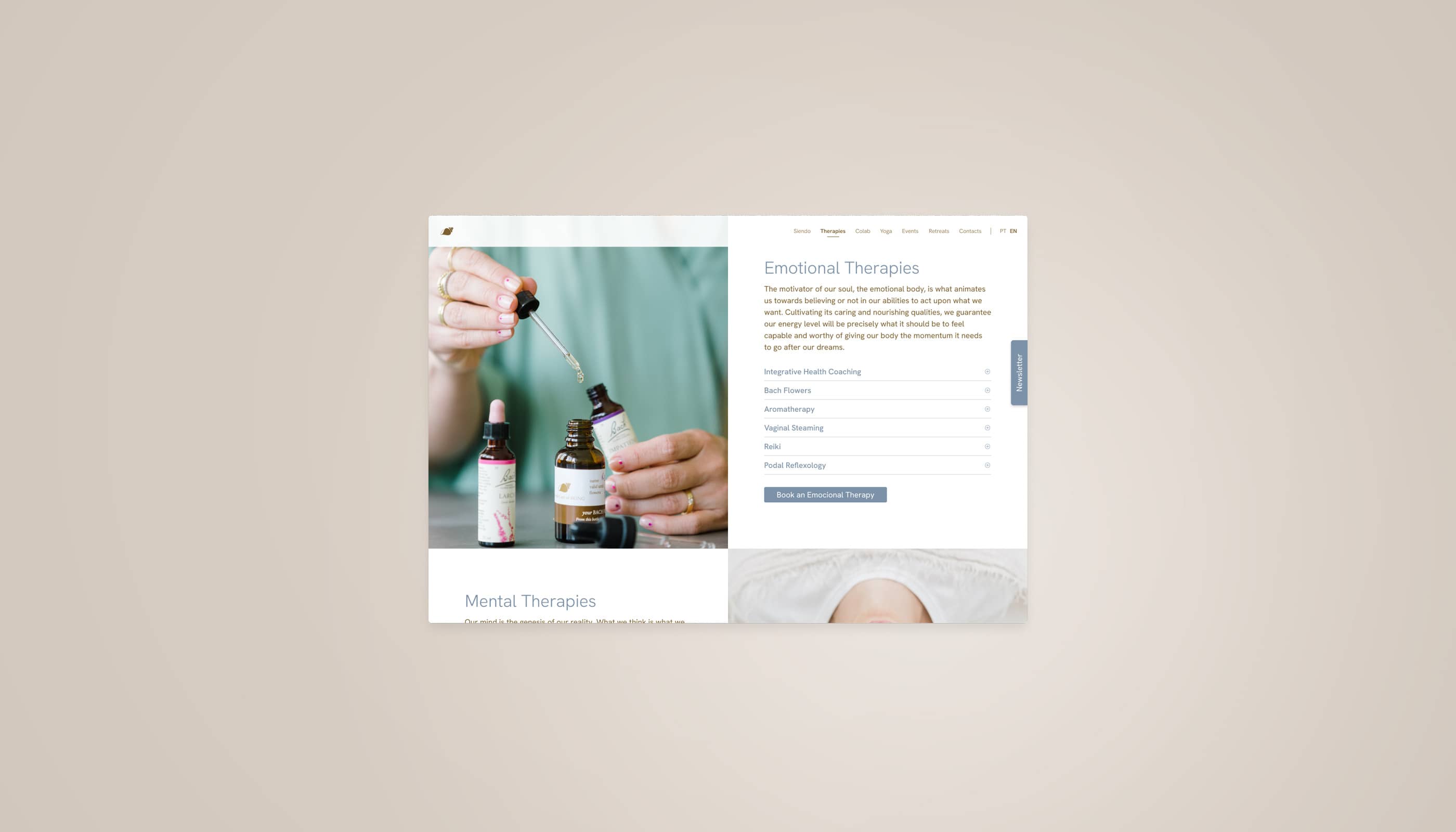
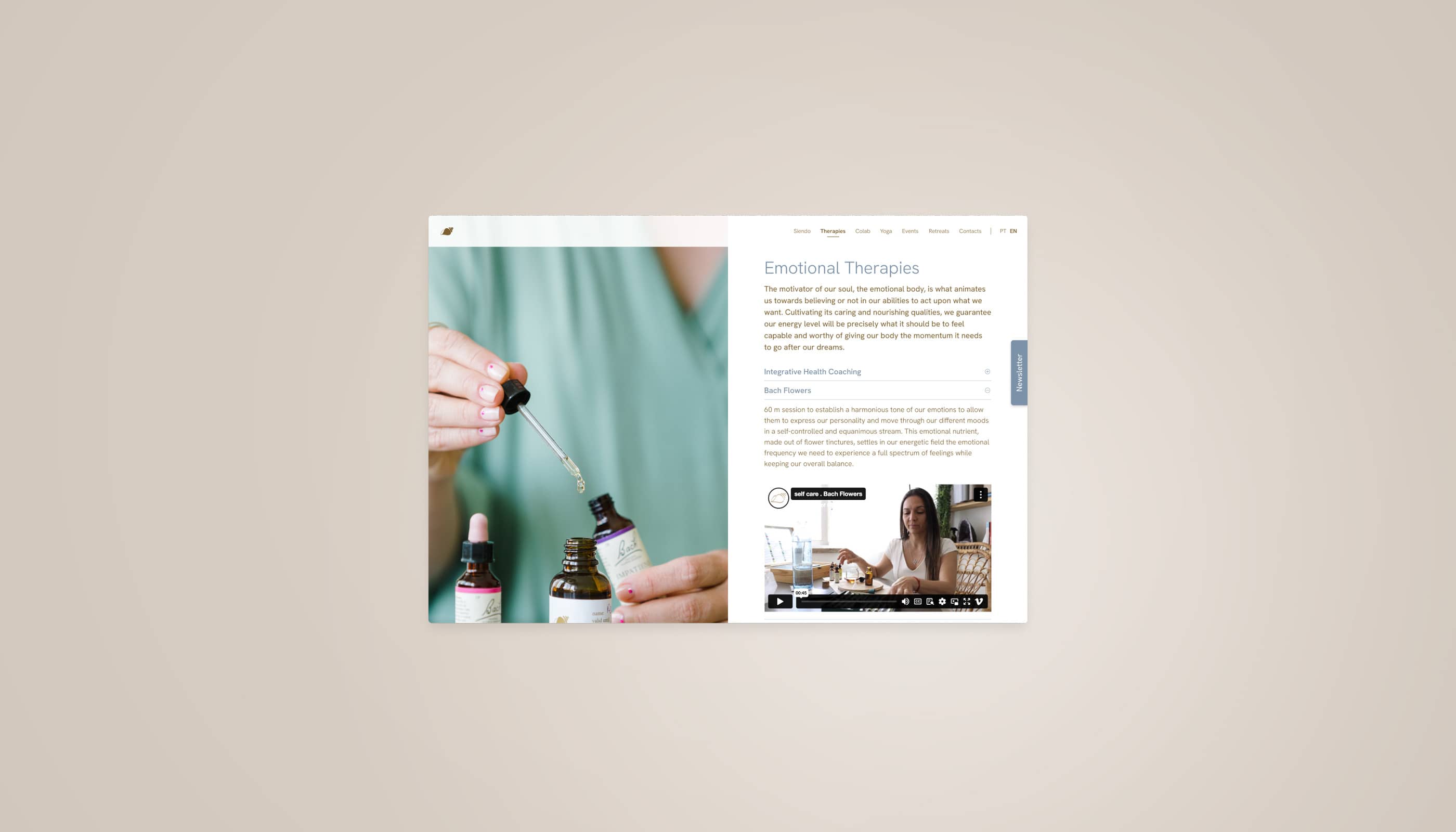
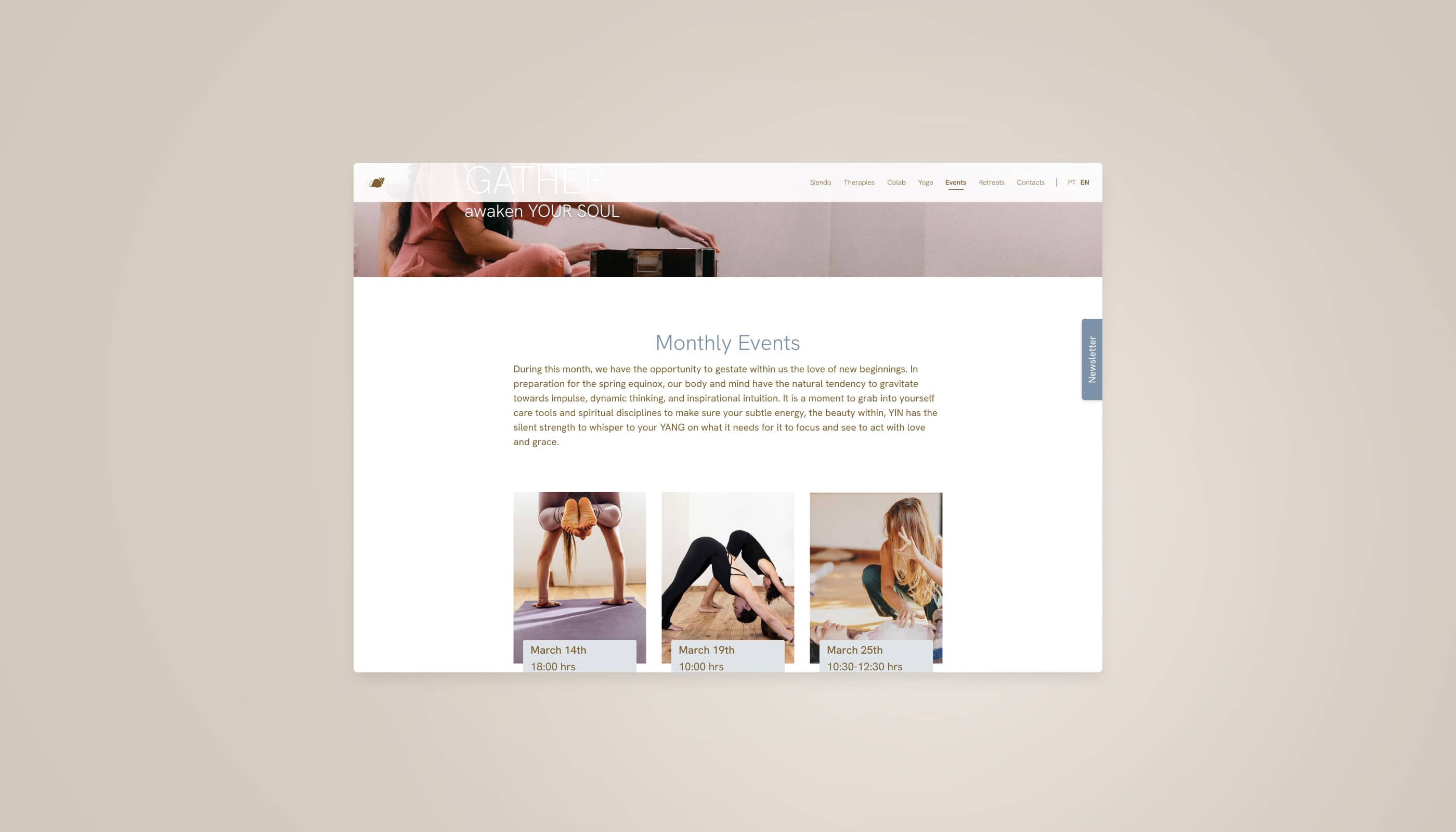
Navigation was simplified into a clear top-level structure that reflected how users actually think about the services, not how the business had internally categorised them. Each service area got a consistent page template with a clear hierarchy: what it is, who it's for, and how to book.
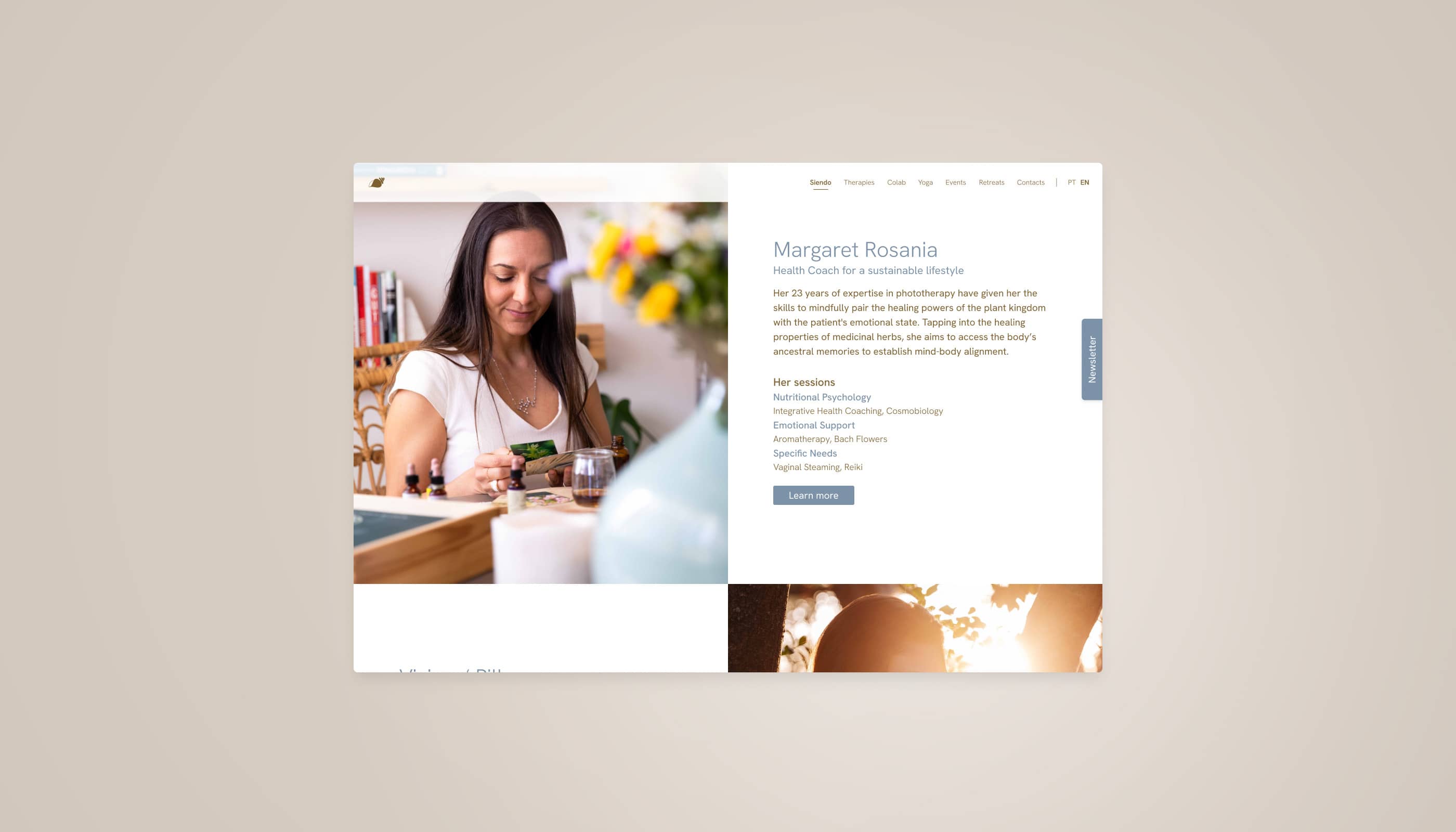
Practitioner pages were redesigned to lead with the person, not the credentials. Photo, name, speciality, and a brief description come before the list of services, which makes the page feel human rather than clinical.
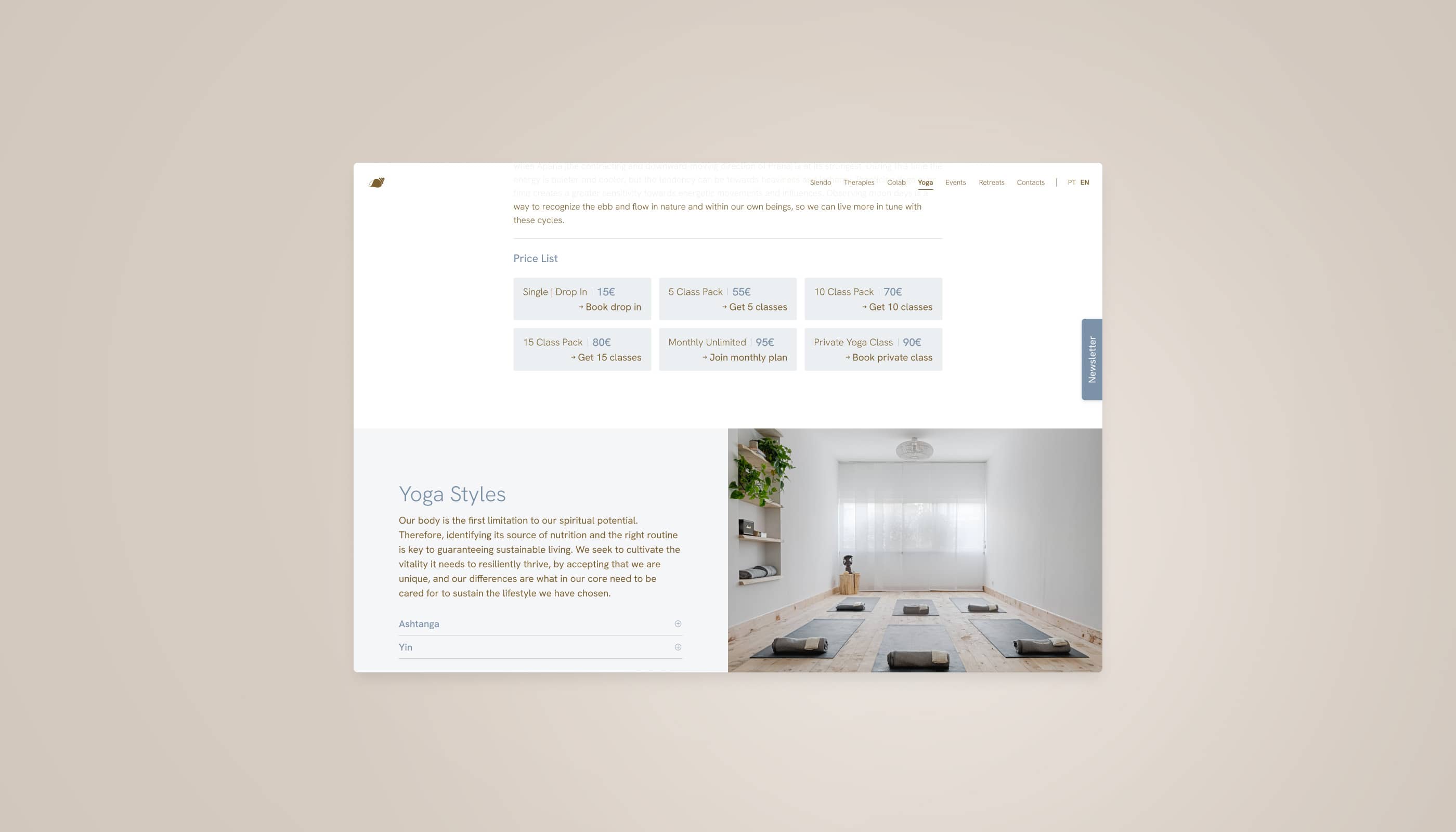
The visual language uses generous whitespace, a restrained colour palette, and editorial-style photography that was already part of the brand. The design work was about applying those elements consistently rather than introducing new ones.
Mobile was treated as a primary context throughout. Spacing, tap targets, and reading flow were all adjusted specifically for smaller screens, which directly contributed to the reduction in mobile navigation drop-off.
The booking form was simplified to reduce friction at the point of commitment, with clearer labels and a reduced number of steps.
Design
The redesign was structured around making the right information findable without effort and the overall experience feel calm and credible.
Navigation was simplified into a clear top-level structure that reflected how users actually think about the services, not how the business had internally categorised them. Each service area got a consistent page template with a clear hierarchy: what it is, who it's for, and how to book.
Practitioner pages were redesigned to lead with the person, not the credentials. Photo, name, speciality, and a brief description come before the list of services, which makes the page feel human rather than clinical.
The visual language uses generous whitespace, a restrained colour palette, and editorial-style photography that was already part of the brand. The design work was about applying those elements consistently rather than introducing new ones.
Mobile was treated as a primary context throughout. Spacing, tap targets, and reading flow were all adjusted specifically for smaller screens, which directly contributed to the reduction in mobile navigation drop-off.
The booking form was simplified to reduce friction at the point of commitment, with clearer labels and a reduced number of steps.
Design
The redesign was structured around making the right information findable without effort and the overall experience feel calm and credible.
Navigation was simplified into a clear top-level structure that reflected how users actually think about the services, not how the business had internally categorised them. Each service area got a consistent page template with a clear hierarchy: what it is, who it's for, and how to book.
Practitioner pages were redesigned to lead with the person, not the credentials. Photo, name, speciality, and a brief description come before the list of services, which makes the page feel human rather than clinical.
The visual language uses generous whitespace, a restrained colour palette, and editorial-style photography that was already part of the brand. The design work was about applying those elements consistently rather than introducing new ones.
Mobile was treated as a primary context throughout. Spacing, tap targets, and reading flow were all adjusted specifically for smaller screens, which directly contributed to the reduction in mobile navigation drop-off.
The booking form was simplified to reduce friction at the point of commitment, with clearer labels and a reduced number of steps.
Validation & Delivery
Usability testing was conducted remotely before launch with new and returning users. The primary focus was the booking flow and service navigation. Users completed the booking flow without assistance and located services faster than in the previous experience. Findings from testing led to small but meaningful adjustments to label clarity and mobile tap targets before launch.
Post-launch, site analytics and client feedback were monitored to track performance. The metrics above reflect the cumulative impact measured in the months following launch.
After handoff, the Siendo team took full ownership of the content through the CMS. The modular structure and consistent templates meant they could add new services, update practitioner pages, and expand their offering without needing design or development support. The client was trained on the system and has managed the site independently since launch.
Validation & Delivery
Usability testing was conducted remotely before launch with new and returning users. The primary focus was the booking flow and service navigation. Users completed the booking flow without assistance and located services faster than in the previous experience. Findings from testing led to small but meaningful adjustments to label clarity and mobile tap targets before launch.
Post-launch, site analytics and client feedback were monitored to track performance. The metrics above reflect the cumulative impact measured in the months following launch.
After handoff, the Siendo team took full ownership of the content through the CMS. The modular structure and consistent templates meant they could add new services, update practitioner pages, and expand their offering without needing design or development support. The client was trained on the system and has managed the site independently since launch.
Validation & Delivery
Usability testing was conducted remotely before launch with new and returning users. The primary focus was the booking flow and service navigation. Users completed the booking flow without assistance and located services faster than in the previous experience. Findings from testing led to small but meaningful adjustments to label clarity and mobile tap targets before launch.
Post-launch, site analytics and client feedback were monitored to track performance. The metrics above reflect the cumulative impact measured in the months following launch.
After handoff, the Siendo team took full ownership of the content through the CMS. The modular structure and consistent templates meant they could add new services, update practitioner pages, and expand their offering without needing design or development support. The client was trained on the system and has managed the site independently since launch.
WORK
Case Studies
Six case studies across crypto wallets, design systems, brand identity, and web products. The work ranges from feature UX to full brand restructures, with a consistent focus on clarity, scalability, and detail.


WORK
Case Studies
Six case studies across crypto wallets, design systems, brand identity, and web products. The work ranges from feature UX to full brand restructures, with a consistent focus on clarity, scalability, and detail.
WORK
Case Studies
Six case studies across crypto wallets, design systems, brand identity, and web products. The work ranges from feature UX to full brand restructures, with a consistent focus on clarity, scalability, and detail.
Thanks
Thanks for taking the time to look at my work.
© 2026 All rights reserved.
Thanks
Thanks for taking the time to look at my work.
© 2026 All rights reserved.
Thanks
Thanks for taking the time to look at my work.
© 2025 All rights reserved.