PROJECTS
Boosting Growth Through Gamification. Best Wallet Airdrop Website
Workflow
Introduction
Research & Synthesis
Feature Development
Design
Usability Validation
TEAM
Mónica Ferraz
Joana Villas
Pedro Ribeiro
TIME
2023/2024
PRODUCT
Best Wallet Airdrop
Metrics
Business
15% user growth attributed to referral Quests
30% uplift in wallet downloads via Airdrop traffic
Token purchases increased by 50% over three months
Best Wallet reached 350k+ users during the campaign period
Users
Over 5 million points earned in the first 3 weeks
70% Quest completion rate among registered users
10K+ daily user actions tracked across X and Discord
4.6/5 average rating on the App Store during the campaign period
Metrics
Business
15% user growth attributed to referral Quests
30% uplift in wallet downloads via Airdrop traffic
Token purchases increased by 50% over three months
Best Wallet reached 350k+ users during the campaign period
Users
Over 5 million points earned in the first 3 weeks
70% Quest completion rate among registered users
10K+ daily user actions tracked across X and Discord
4.6/5 average rating on the App Store during the campaign period
Metrics
Business
15% user growth attributed to referral Quests
30% uplift in wallet downloads via Airdrop traffic
Token purchases increased by 50% over three months
Best Wallet reached 350k+ users during the campaign period
Users
Over 5 million points earned in the first 3 weeks
70% Quest completion rate among registered users
10K+ daily user actions tracked across X and Discord
4.6/5 average rating on the App Store during the campaign period
Introduction
The Best Wallet Airdrop was a campaign to distribute $BEST tokens to early supporters through community-driven tasks. Users could register, complete Quests, track their progress, and refer others, earning points that would later convert to $BEST.
Designing this product came with a specific set of constraints. Several core components were third-party widgets with limited customisation options, which meant design decisions had to work within fixed structural and visual boundaries. Some platform behaviours, like leaderboard positioning and Quest validation, also had technical limitations that shaped how the experience was communicated to users. The design had to make these constraints invisible, or at minimum, not erode trust.
The campaign completed its first season successfully.
Introduction
The Best Wallet Airdrop was a campaign to distribute $BEST tokens to early supporters through community-driven tasks. Users could register, complete Quests, track their progress, and refer others, earning points that would later convert to $BEST.
Designing this product came with a specific set of constraints. Several core components were third-party widgets with limited customisation options, which meant design decisions had to work within fixed structural and visual boundaries. Some platform behaviours, like leaderboard positioning and Quest validation, also had technical limitations that shaped how the experience was communicated to users. The design had to make these constraints invisible, or at minimum, not erode trust.
The campaign completed its first season successfully.
Introduction
The Best Wallet Airdrop was a campaign to distribute $BEST tokens to early supporters through community-driven tasks. Users could register, complete Quests, track their progress, and refer others, earning points that would later convert to $BEST.
Designing this product came with a specific set of constraints. Several core components were third-party widgets with limited customisation options, which meant design decisions had to work within fixed structural and visual boundaries. Some platform behaviours, like leaderboard positioning and Quest validation, also had technical limitations that shaped how the experience was communicated to users. The design had to make these constraints invisible, or at minimum, not erode trust.
The campaign completed its first season successfully.

Research & Synthesis
The starting point was a benchmarking review of existing airdrop platforms and gamification mechanics in the crypto space. I analysed how comparable campaigns structured participation, drove retention, and communicated rewards, identifying patterns that worked and friction points that consistently caused drop-off.
Three priorities emerged from that analysis: users needed to understand where they stood at any given moment, they needed to trust that completed actions were being registered correctly, and the rewards had to feel proportional and worth pursuing. These three findings directly shaped the structure and tone of the platform.
Research & Synthesis
The starting point was a benchmarking review of existing airdrop platforms and gamification mechanics in the crypto space. I analysed how comparable campaigns structured participation, drove retention, and communicated rewards, identifying patterns that worked and friction points that consistently caused drop-off.
Three priorities emerged from that analysis: users needed to understand where they stood at any given moment, they needed to trust that completed actions were being registered correctly, and the rewards had to feel proportional and worth pursuing. These three findings directly shaped the structure and tone of the platform.
Research & Synthesis
The starting point was a benchmarking review of existing airdrop platforms and gamification mechanics in the crypto space. I analysed how comparable campaigns structured participation, drove retention, and communicated rewards, identifying patterns that worked and friction points that consistently caused drop-off.
Three priorities emerged from that analysis: users needed to understand where they stood at any given moment, they needed to trust that completed actions were being registered correctly, and the rewards had to feel proportional and worth pursuing. These three findings directly shaped the structure and tone of the platform.
Feature Development
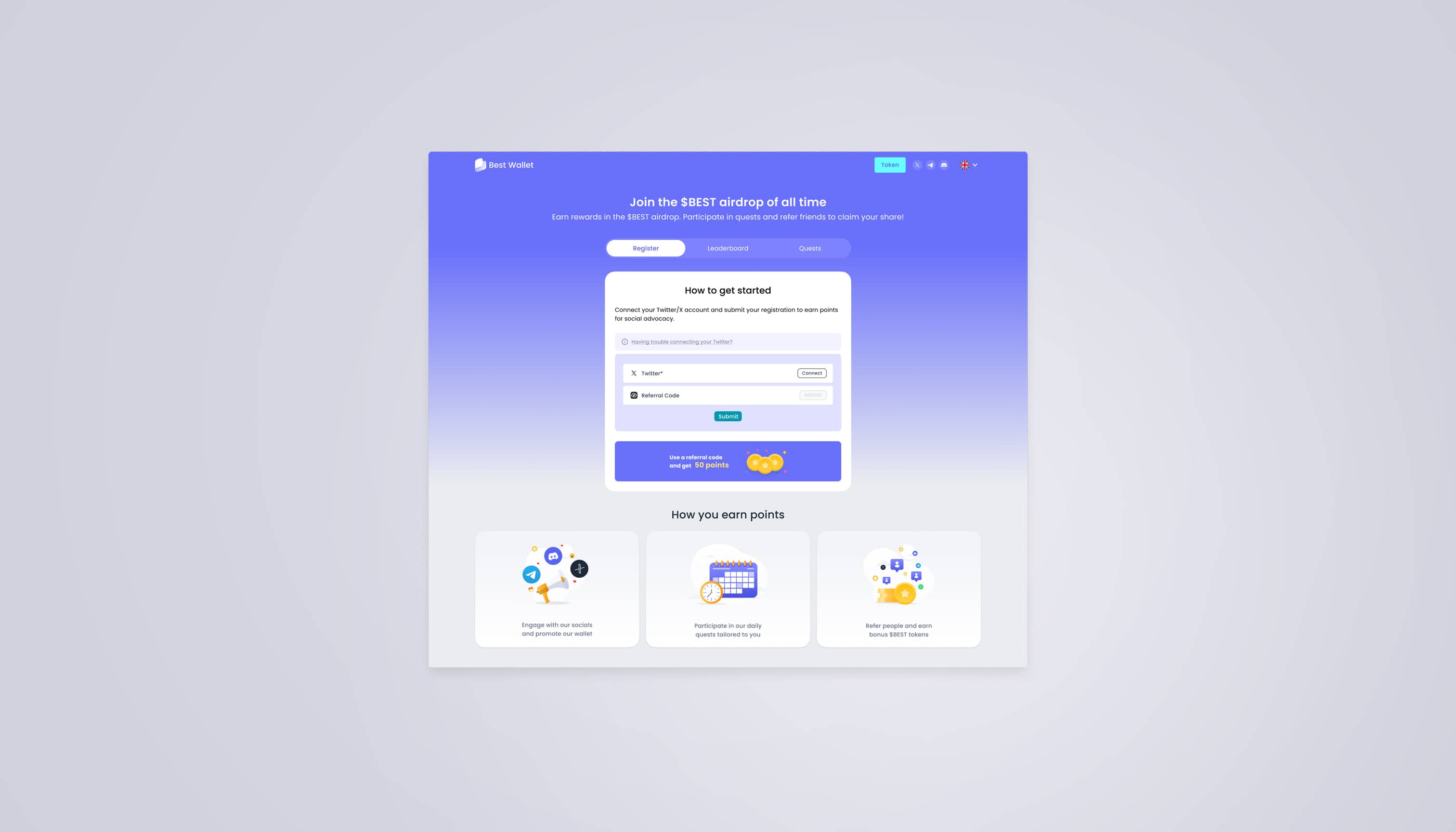
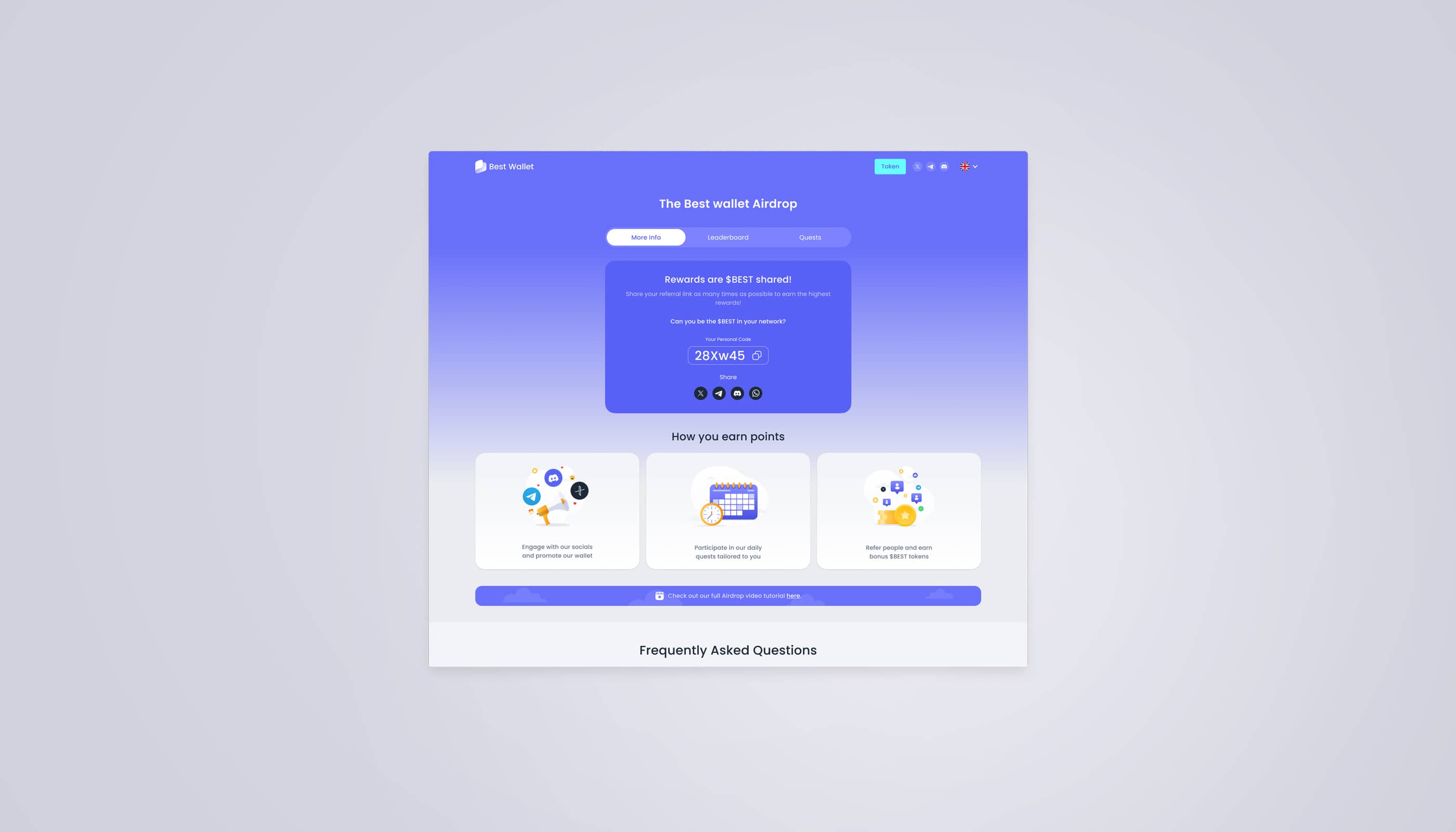
Working with the product team, we mapped the key user journeys from registration through to reward distribution. We defined the Quest types, point logic, and referral structure around three UX principles: onboarding should be fast, daily engagement should be encouraged, and every user action should feel like it counts.
The technical constraints shaped several product decisions. Leaderboard positioning required a connected wallet to display correctly, so the design needed to communicate that dependency clearly without creating friction at the wrong moment. Quest validation could not be automated, so we introduced dynamic buttons that let users manually confirm completed tasks, with visual state changes to confirm recognition. These were not ideal solutions in isolation, but they were honest ones that worked within what was possible.
Feature Development
Working with the product team, we mapped the key user journeys from registration through to reward distribution. We defined the Quest types, point logic, and referral structure around three UX principles: onboarding should be fast, daily engagement should be encouraged, and every user action should feel like it counts.
The technical constraints shaped several product decisions. Leaderboard positioning required a connected wallet to display correctly, so the design needed to communicate that dependency clearly without creating friction at the wrong moment. Quest validation could not be automated, so we introduced dynamic buttons that let users manually confirm completed tasks, with visual state changes to confirm recognition. These were not ideal solutions in isolation, but they were honest ones that worked within what was possible.
Feature Development
Working with the product team, we mapped the key user journeys from registration through to reward distribution. We defined the Quest types, point logic, and referral structure around three UX principles: onboarding should be fast, daily engagement should be encouraged, and every user action should feel like it counts.
The technical constraints shaped several product decisions. Leaderboard positioning required a connected wallet to display correctly, so the design needed to communicate that dependency clearly without creating friction at the wrong moment. Quest validation could not be automated, so we introduced dynamic buttons that let users manually confirm completed tasks, with visual state changes to confirm recognition. These were not ideal solutions in isolation, but they were honest ones that worked within what was possible.
Design
I designed the full Airdrop experience. The structure was built to guide users through four distinct stages: understanding the campaign, registering, completing tasks, and tracking rewards.
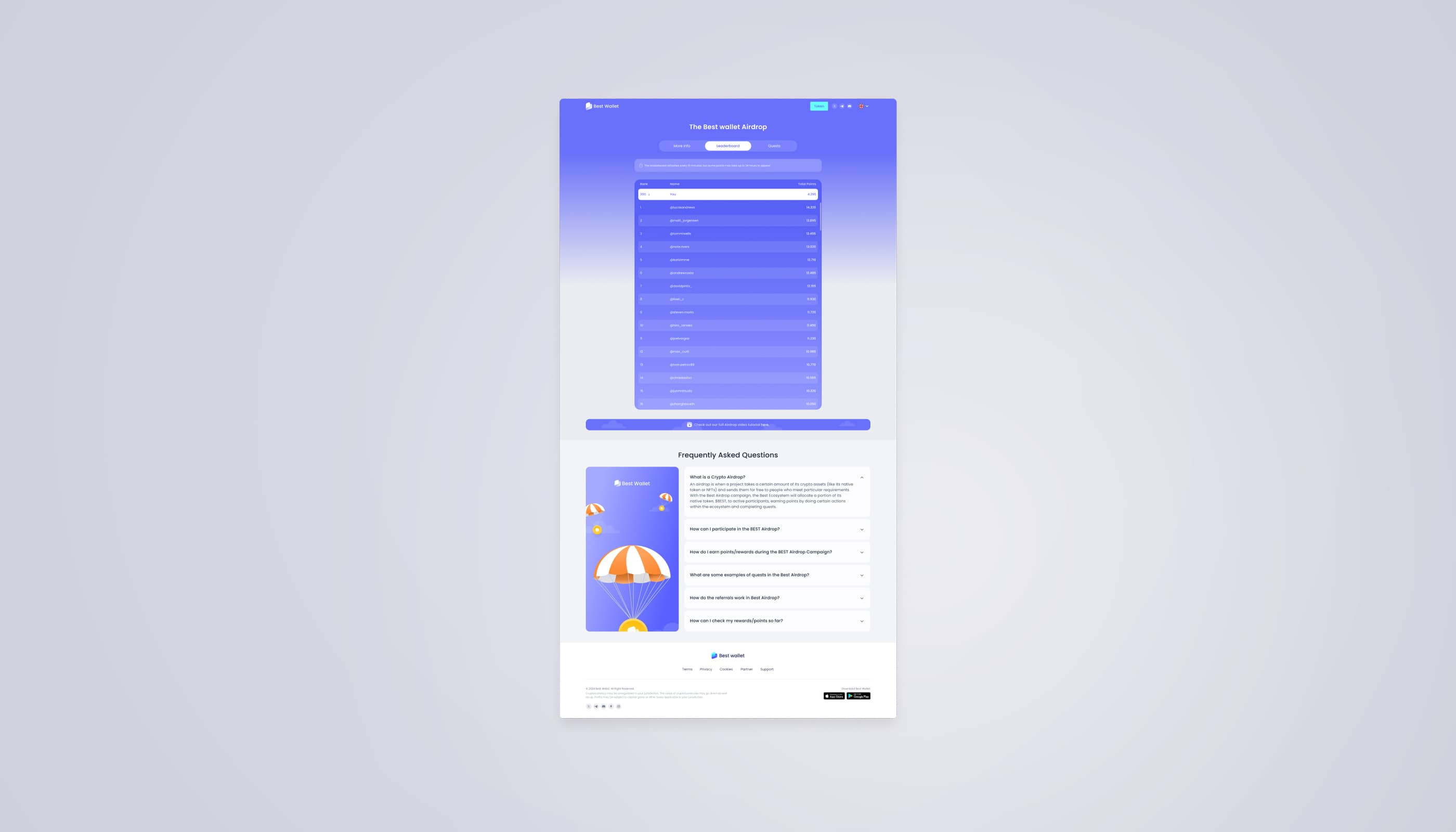
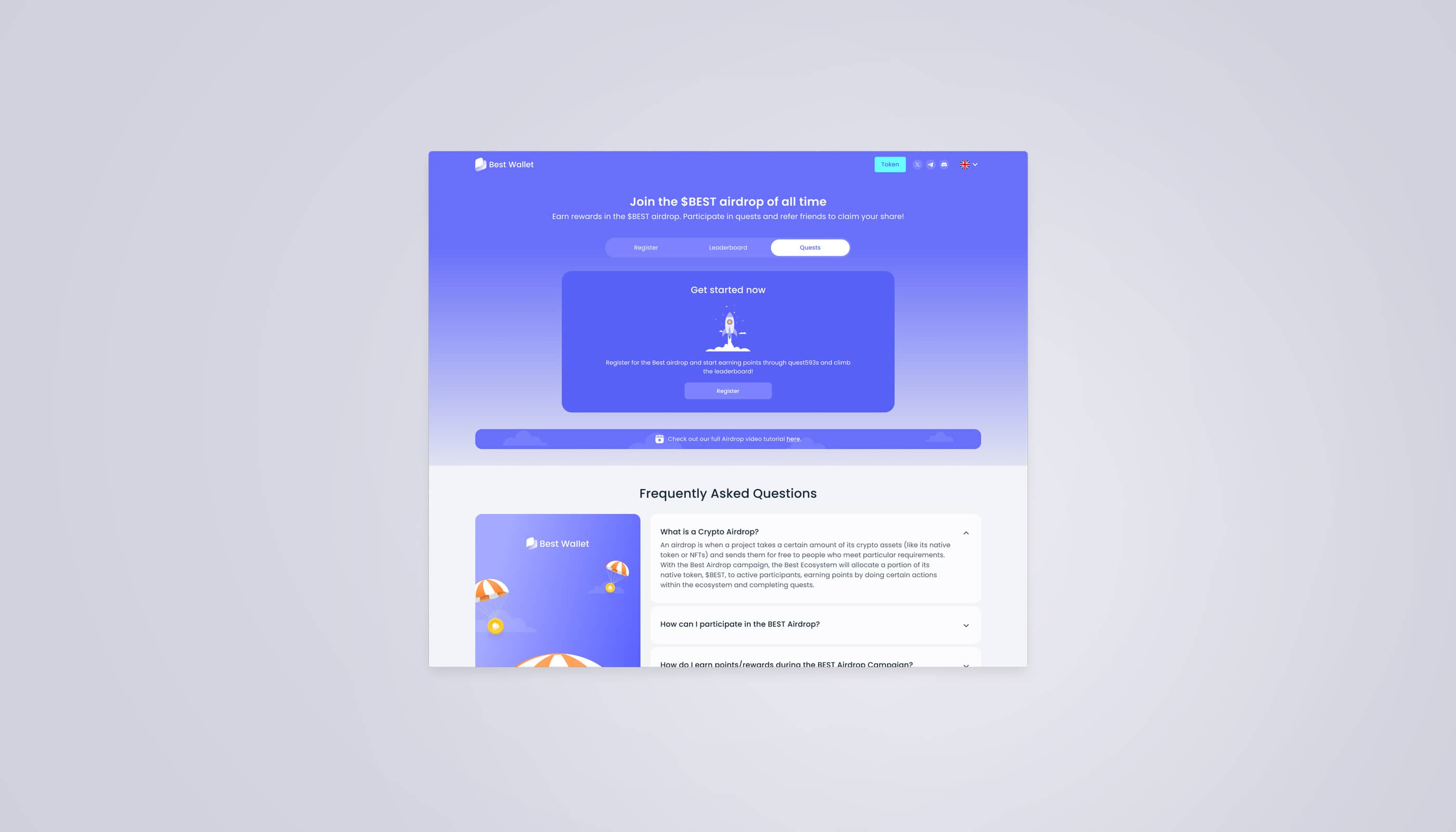
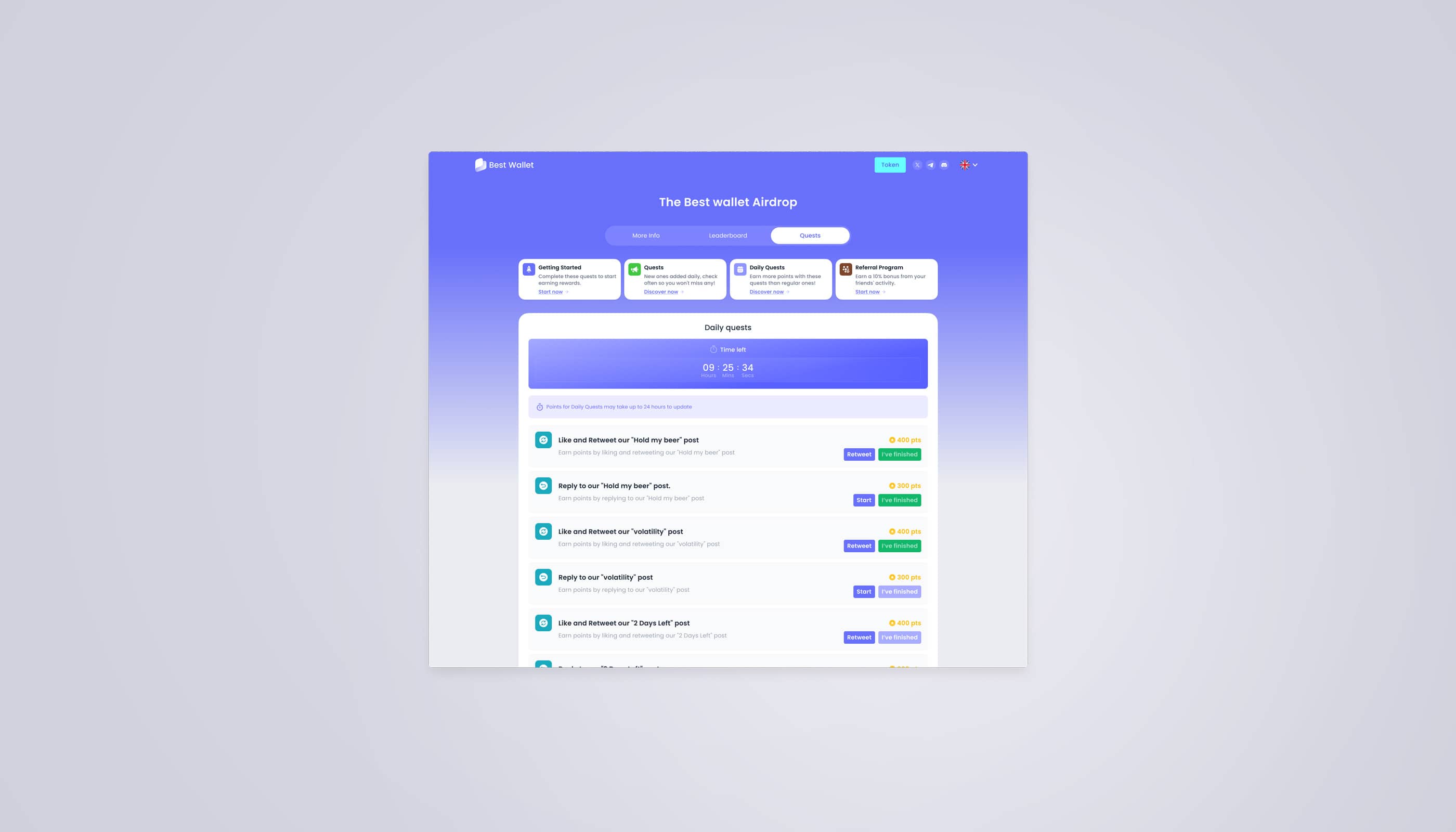
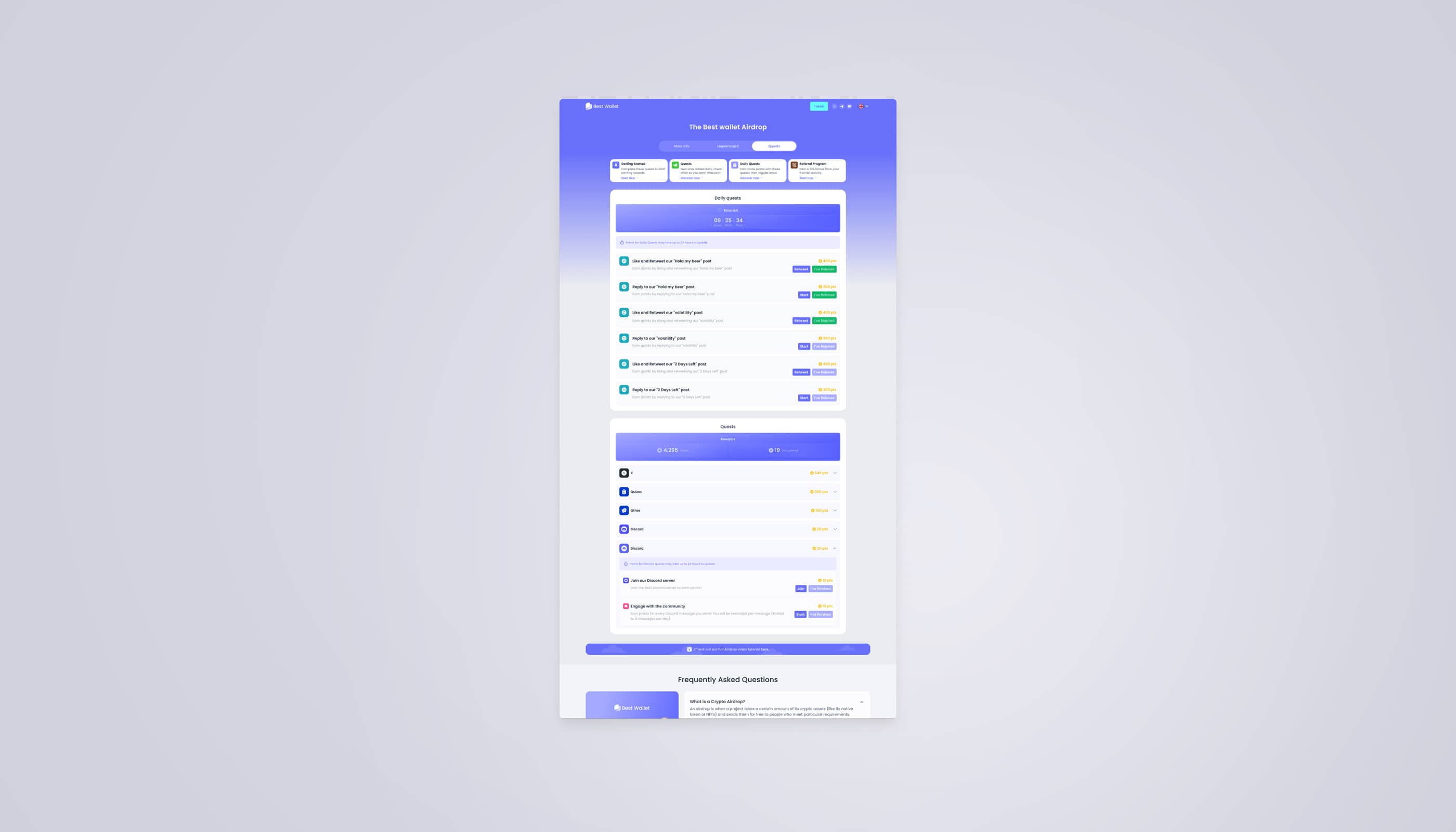
Key design decisions included a tabbed navigation structure that separated Getting Started, Leaderboard, and Quests into distinct contexts, reducing cognitive load for new users. The Quests dashboard segmented tasks by type, daily, one-time, and social, with clear point values and visual state changes for completed actions. The reward tracker gave users a transparent view of how points accumulated and what they translated to.
Design
I designed the full Airdrop experience. The structure was built to guide users through four distinct stages: understanding the campaign, registering, completing tasks, and tracking rewards.
Key design decisions included a tabbed navigation structure that separated Getting Started, Leaderboard, and Quests into distinct contexts, reducing cognitive load for new users. The Quests dashboard segmented tasks by type, daily, one-time, and social, with clear point values and visual state changes for completed actions. The reward tracker gave users a transparent view of how points accumulated and what they translated to.
Design
I designed the full Airdrop experience. The structure was built to guide users through four distinct stages: understanding the campaign, registering, completing tasks, and tracking rewards.
Key design decisions included a tabbed navigation structure that separated Getting Started, Leaderboard, and Quests into distinct contexts, reducing cognitive load for new users. The Quests dashboard segmented tasks by type, daily, one-time, and social, with clear point values and visual state changes for completed actions. The reward tracker gave users a transparent view of how points accumulated and what they translated to.
The "How to Get Started" widget was a third-party component with limited customisation. The layout structure and button colour were fixed. I worked within those constraints to integrate it as cohesively as possible with the surrounding design language without over-engineering a workaround.
Gamification elements including streaks, tags, and the leaderboard were introduced to sustain engagement beyond the initial registration spike.
The "How to Get Started" widget was a third-party component with limited customisation. The layout structure and button colour were fixed. I worked within those constraints to integrate it as cohesively as possible with the surrounding design language without over-engineering a workaround.
Gamification elements including streaks, tags, and the leaderboard were introduced to sustain engagement beyond the initial registration spike.
The "How to Get Started" widget was a third-party component with limited customisation. The layout structure and button colour were fixed. I worked within those constraints to integrate it as cohesively as possible with the surrounding design language without over-engineering a workaround.
Gamification elements including streaks, tags, and the leaderboard were introduced to sustain engagement beyond the initial registration spike.
Usability Validation
Testing started before launch and continued throughout the campaign. Early sessions identified friction in two areas: users were uncertain whether their completed Quests had been registered, and leaderboard positions were inconsistent for users who hadn't connected their wallet.
Several targeted changes followed. Warning messages were added to the Leaderboard and Quest sections to explain update timing and set accurate expectations. A One-Time Rewards board was introduced to give users a running total of completed Quests and points earned. Dynamic Quest buttons allowed manual confirmation of completed tasks. Once confirmed, the CTA changed to a green 'I've Finished' state, giving users a clear visual signal that the action had been recognised.
After launch, a registration warning was added to help users troubleshoot X connection issues, and a video tutorial CTA was introduced to reduce onboarding drop-off. These changes reduced support requests and contributed to the 70% Quest completion rate measured over the campaign period.
Usability Validation
Testing started before launch and continued throughout the campaign. Early sessions identified friction in two areas: users were uncertain whether their completed Quests had been registered, and leaderboard positions were inconsistent for users who hadn't connected their wallet.
Several targeted changes followed. Warning messages were added to the Leaderboard and Quest sections to explain update timing and set accurate expectations. A One-Time Rewards board was introduced to give users a running total of completed Quests and points earned. Dynamic Quest buttons allowed manual confirmation of completed tasks. Once confirmed, the CTA changed to a green 'I've Finished' state, giving users a clear visual signal that the action had been recognised.
After launch, a registration warning was added to help users troubleshoot X connection issues, and a video tutorial CTA was introduced to reduce onboarding drop-off. These changes reduced support requests and contributed to the 70% Quest completion rate measured over the campaign period.
Usability Validation
Testing started before launch and continued throughout the campaign. Early sessions identified friction in two areas: users were uncertain whether their completed Quests had been registered, and leaderboard positions were inconsistent for users who hadn't connected their wallet.
Several targeted changes followed. Warning messages were added to the Leaderboard and Quest sections to explain update timing and set accurate expectations. A One-Time Rewards board was introduced to give users a running total of completed Quests and points earned. Dynamic Quest buttons allowed manual confirmation of completed tasks. Once confirmed, the CTA changed to a green 'I've Finished' state, giving users a clear visual signal that the action had been recognised.
After launch, a registration warning was added to help users troubleshoot X connection issues, and a video tutorial CTA was introduced to reduce onboarding drop-off. These changes reduced support requests and contributed to the 70% Quest completion rate measured over the campaign period.
WORK
Case Studies
Six case studies across crypto wallets, design systems, brand identity, and web products. The work ranges from feature UX to full brand restructures, with a consistent focus on clarity, scalability, and detail.


WORK
Case Studies
Six case studies across crypto wallets, design systems, brand identity, and web products. The work ranges from feature UX to full brand restructures, with a consistent focus on clarity, scalability, and detail.
WORK
Case Studies
Six case studies across crypto wallets, design systems, brand identity, and web products. The work ranges from feature UX to full brand restructures, with a consistent focus on clarity, scalability, and detail.
Thanks
Thanks for taking the time to look at my work.
© 2026 All rights reserved.
Thanks
Thanks for taking the time to look at my work.
© 2026 All rights reserved.
Thanks
Thanks for taking the time to look at my work.
© 2025 All rights reserved.